
Virtual Couples Therapy: Can Couples Really Connect Online?
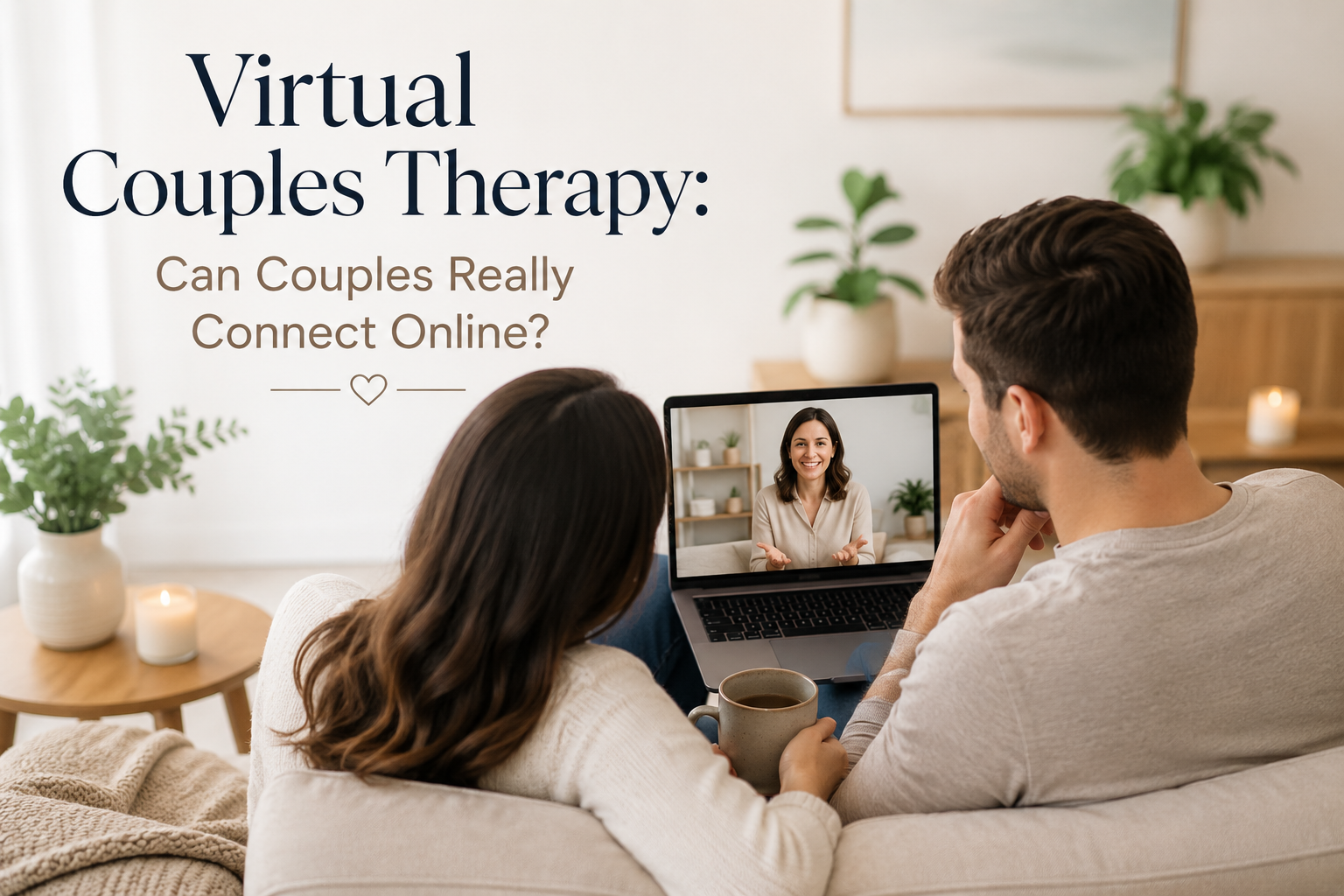
When a relationship is struggling, finding the time to attend couples therapy can feel like one more challenge.
Between work, children, household responsibilities, and conflicting schedules, getting both partners into a therapist's office can be difficult.
That's one reason more couples are considering virtual couples therapy.
But it raises an important question:
Can couples really connect and work on their relationship through a screen?
For many couples, the answer is yes.
Why Couples Choose Online Therapy
Virtual couples therapy offers flexibility that can make getting support more realistic.
Instead of travelling to an appointment, couples can connect from a private location that works for both partners.
This can be particularly helpful when:
Partners have different work schedules
One partner travels frequently
Childcare is difficult to arrange
The couple lives in different locations
Commuting makes regular appointments difficult
One or both partners feel more comfortable at home
Removing these practical barriers can make it easier to attend therapy consistently.
What Happens During Virtual Couples Therapy?
Couples therapy isn't simply about learning how to communicate better.
Often, couples become stuck in repetitive patterns.
One partner may pursue a conversation while the other withdraws. One may become critical while the other shuts down. Arguments may begin over something small but quickly become about much deeper feelings of hurt, rejection, loneliness, or fear.
Therapy can help couples slow these interactions down and understand what is happening underneath the conflict.
Rather than focusing only on “Who is right?”, couples can begin exploring:
What happens between us when we feel hurt or disconnected?
What are we each needing from the other?
How can we respond differently when the same pattern begins?
Can Virtual Couples Therapy Still Feel Personal?
Absolutely.
A therapy session isn't meaningful because of the physical room you're sitting in. Connection comes from feeling heard, understood, and supported.
For some couples, being in their own environment can actually make difficult conversations feel more natural.
Your therapist can still observe communication patterns, emotional responses, and interactions between partners while helping you slow down and understand one another.
What If We're Constantly Fighting?
You don't need to wait until your relationship is in crisis to seek couples therapy.
In fact, many couples benefit from seeking support before resentment and disconnection become deeply established.
Therapy may help when couples are experiencing:
Frequent arguments
Communication difficulties
Emotional disconnection
Trust concerns
Intimacy challenges
Repeated conflict
Feeling unheard or misunderstood
Major life transitions
Different expectations about the relationship
Couples therapy can provide a structured space to address these issues with support rather than trying to resolve everything during another difficult conversation at home.
Finding a Couples Therapist Who Understands Your Relationship
Every relationship is different.
Your cultural background, family experiences, communication styles, values, and past experiences can all influence how you relate to your partner.
At Meaningful Connections, we work with couples from diverse backgrounds, including interracial and intercultural couples, helping partners better understand the patterns that develop between them.
Our approach is compassionate, collaborative, and focused on creating greater understanding and emotional connection.
We offer virtual couples therapy throughout Ontario, as well as in-person therapy in Georgetown and Halton Hills.
You Don't Have to Figure It Out Alone
If you and your partner keep having the same argument, feel increasingly disconnected, or simply want to strengthen your relationship, couples therapy can provide a space to pause and understand what is happening between you.
Virtual therapy makes that support more accessible without adding another commute to your already busy lives.
Your relationship doesn't have to be perfect before you seek help. Sometimes reaching out is the first step toward finding your way back to one another.
